Chronic inflammation: the quiet thread behind most causes of death
Two kinds of inflammation
Inflammation has a good side. When you get an infection or a cut, your immune system floods the area with signals and cells, clears the threat, repairs the damage and then calms down. That's acute inflammation: short, strong, and it switches off.
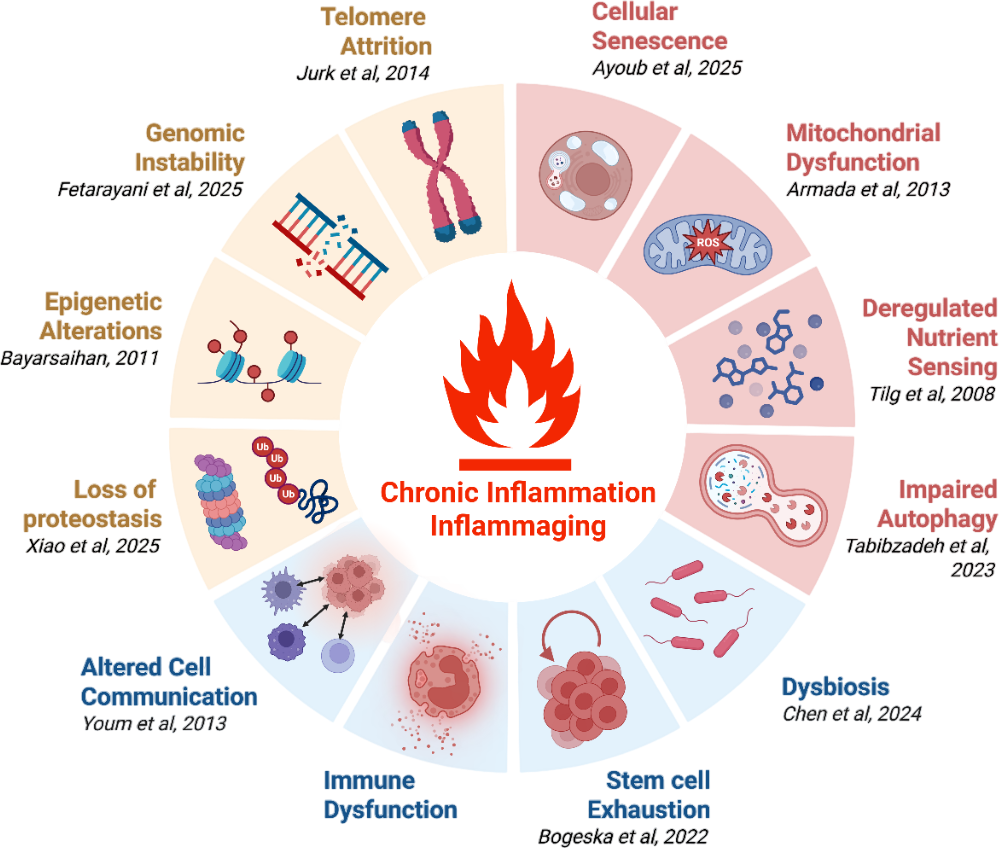
The problem is the other kind. Many people, especially as they get older, develop a low level of inflammation that never fully switches off. Scientists call it systemic chronic inflammation. It isn't caused by an infection, it doesn't make you feel ill, and there's no single blood test that reliably picks it up. But over years, it quietly damages tissues and organs.
Linked to more than half of all deaths
In 2019, a group of leading ageing and immunology researchers led by David Furman published a Perspective in Nature Medicine bringing the evidence together. Their headline point: diseases linked to inflammation, such as heart disease, stroke, cancer, diabetes, kidney disease, fatty liver disease, and autoimmune and neurodegenerative conditions, account for more than 50% of all deaths worldwide.
That doesn't mean inflammation causes half of all deaths on its own. These diseases have many causes. But chronic inflammation is one of the few threads running through almost all of them.
The authors pointed to several large studies. In one analysis of more than 160,000 people across 54 studies, higher levels of CRP, a common blood marker of inflammation, went with a higher risk of heart disease and of dying from it. Another study of more than 160,000 people in Glasgow found that a combination of simple inflammation markers predicted death from any cause over 8 years, including cancer and heart disease.
What keeps inflammation switched on
The paper lists the usual suspects, most of them tied to modern life:
- physical inactivity
- belly fat, which acts like an active inflammatory organ
- diets high in ultra processed food, sugar and salt, and low in fibre
- chronic stress, poor sleep and social isolation
- air pollution and some industrial chemicals
- smoking and some long lasting infections
A study of twins cited in the paper found that differences in chronic inflammation between people come mostly from environment and lifestyle, not from genes. And in several traditional hunter gatherer and farming communities, inflammation markers don't creep up with age the way they do in industrialised countries.
What we still don't know
The authors are honest about the gaps. There's still no standard test for chronic inflammation. And while many of its causes can in principle be changed, few studies have shown that changing them actually brings inflammation down and keeps it down. Lowering an inflammation marker also doesn't automatically mean living longer. That has to be proven, trial by trial.
Why it matters to us
Chronic inflammation sits upstream of the diseases that kill most people. That's what makes it such an interesting target: instead of treating each disease once it appears, you could act on something they share, years earlier. Lifestyle will always be the foundation. Our goal at EquiliBio is to add a safe, precise option for people whose inflammation stays high even when they do everything right.
Source: Furman D, Campisi J, Verdin E, et al. Chronic inflammation in the etiology of disease across the life span. Nature Medicine 25, 1822–1832 (2019).